
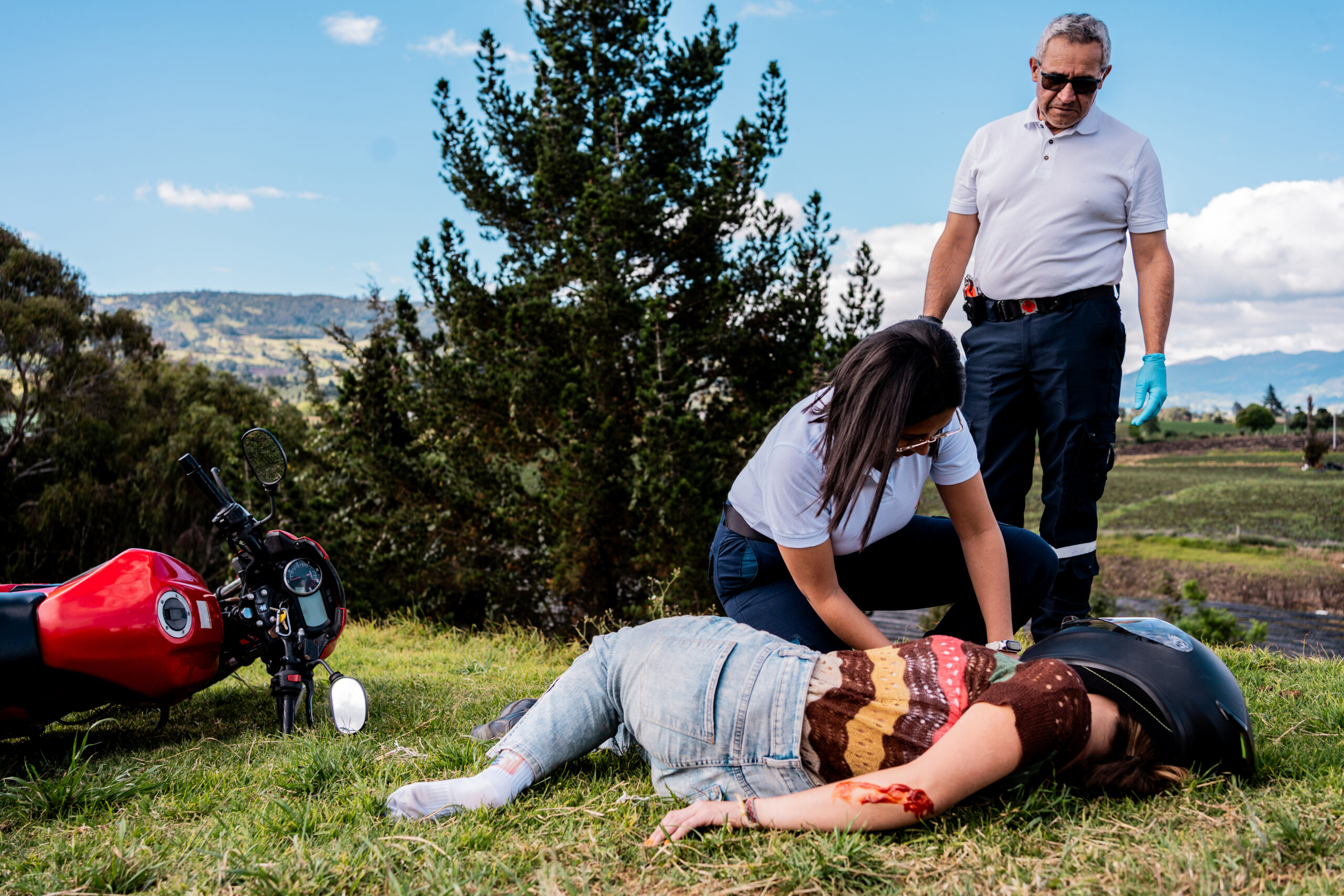
Motorcycle accidents happen fast. One moment you’re riding through Charleston, and the next you’re on the pavement. What you do in the minutes, hours, and days after a motorcycle accident in South Carolina can shape the entire outcome of any legal claim that follows.
This guide walks you through each step, clearly and in order.
Step 1: Get to Safety and Call 911
Move to a safe location if you can, then call 911 immediately. Staying at the scene and getting help are both legally required.
If you can move without making your injuries worse, get out of the flow of traffic. South Carolina law requires drivers involved in an accident to remain at the scene. Under S.C. Code Ann. § 56-5-1210, leaving the scene of an accident involving injury or death is a criminal offense.
Call 911 right away. A police report creates an official record of the crash, which becomes critical evidence later. Emergency responders will also assess and document visible injuries.
Step 2: Seek Medical Attention — Even If You Feel Fine
See a doctor immediately after any motorcycle accident. Adrenaline can mask serious injuries, and delayed treatment weakens your claim.
Traumatic brain injuries, internal bleeding, and spinal damage often don’t produce obvious symptoms right away. Getting evaluated creates a medical record that directly connects your injuries to the crash. If you wait days before seeing a doctor, an insurance company will argue your injuries were not serious, or that something else caused them.
Go to the emergency room or an urgent care clinic the same day. Follow every recommendation your doctor gives you, and keep records of all appointments, prescriptions, and diagnoses.
Step 3: Document the Scene
Gather as much evidence as possible at the scene. Photos, witness information, and physical details all support your claim.
If you are physically able, collect the following before leaving:
- Photographs of all vehicles, road conditions, skid marks, debris, and your injuries
- The other driver’s name, license number, vehicle registration, and insurance information
- Names and contact details of any witnesses
- The responding officer’s name and badge number, plus the incident report number
Take note of conditions that may have contributed to the crash, such as a pothole, poor signage, or a lane obstruction. On busy routes like I-26 or Highway 17 near Charleston, road conditions are a documented factor in many motorcycle crashes.
Step 4: Report the Accident to Your Insurance Company
Notify your insurer promptly, but stick to the facts. Avoid giving a recorded statement before consulting an attorney.
South Carolina is an at-fault state, meaning the driver responsible for causing the accident is liable for damages. South Carolina requires motor vehicle liability coverage, and S.C. Code Ann. § 38-77-140 establishes the minimum limits of $25,000 for bodily injury per person, $50,000 per accident, and $25,000 for property damage. Be sure to confirm specific motorcycle financial responsibility and coverage requirements with your insurer or attorney.
Report the crash to your insurer, but be cautious. Insurance adjusters work to minimize payouts. Giving a recorded statement early, before you know the full extent of your injuries, can be used against you. Speak with an attorney before you agree to any recorded interview or settlement offer.
Step 5: Understand South Carolina’s Comparative Fault Rules
South Carolina follows a modified comparative fault rule: you may recover damages only if your fault is not greater than the combined fault of the defendants.
Under South Carolina’s comparative negligence system, your total recovery is reduced proportionally by your percentage of fault. For example, if you are found 20% responsible, your award is reduced by 20%; however, if your fault exceeds that of the other parties—more than 50% in a two-party case—you are barred from recovering anything.
Insurance companies often try to assign more blame to the motorcyclist than the facts support. Bias against riders is real, and having clear evidence from the scene protects you against unfair fault assignments.
South Carolina law only requires helmets for operators and passengers under age 21. For adult riders, not wearing a helmet is not illegal and does not automatically bar recovery, though the defense may argue it contributed to or aggravated head and neck injuries to reduce damages.
Step 6: Know the Filing Deadline
South Carolina generally gives injured accident victims three years from the date of the crash to file a personal injury lawsuit.
Under S.C. Code Ann. § 15-3-530, the statute of limitations for personal injury claims is three years. Missing that deadline almost always means losing your right to sue, regardless of how strong your case is. Note that important exceptions can alter this timeline: claims against government entities under the South Carolina Tort Claims Act often carry a shorter two-year deadline along with strict notice requirements, while rules for minors or incapacitated individuals may differ.
Three years sounds like plenty of time, but evidence disappears, witnesses become harder to reach, and insurance companies become less cooperative the longer you wait. Starting the process early gives your case the strongest possible foundation. You can review the filing deadline for a personal injury lawsuit in South Carolina for a more detailed breakdown.
Step 7: Talk to a Motorcycle Accident Attorney
An attorney helps you understand what your claim is worth, handles communication with insurers, and builds the evidence you need.
Motorcycle accident claims involve specific legal and insurance questions that differ from standard car accident cases. Damages can include medical bills, lost wages, property damage, and compensation for pain and suffering. In fatal cases, under S.C. Code Ann. § 15-51-20, a wrongful death claim must be brought by the executor or administrator of the deceased’s estate for the benefit of statutory beneficiaries, such as a surviving spouse and children.
An attorney who handles motorcycle accident claims in South Carolina will know how to counter common insurer tactics and fight for a fair result.
Fuller Law Is Here to Help
If you or someone you love was hurt in a motorcycle accident in or around Charleston, Fuller Law is ready to listen. Call us at 843-994-6610 or contact us to talk through your situation. There is no pressure and no obligation — just a direct conversation about your options.


